As Congolese authorities and international organisations race to contain the Ebola outbreak in eastern DRC, Richard Gardiner argues that reduced global cooperation, funding shortfalls, geopolitical tensions, and the region’s volatile security environment are hampering containment efforts and creating a challenging operating environment for healthcare workers.
In May, a World Health Organisation (WHO) report warned that infectious disease outbreaks are becoming more frequent and severe, while global preparedness to respond to them is increasingly inadequate. The Ebola outbreak in eastern Democratic Republic of Congo (DRC) and its subsequent spread into neighbouring Uganda illustrates how issues identified in the report, including geopolitical fragmentation and reduced international cooperation and funding, translate directly into operational gaps on the ground. These challenges are further exacerbated by political instability and institutional weakness near the epicentre of the outbreak in Ituri Province, increasing risks for healthcare workers on the front lines as the outbreak threatens to extend across the region. Against this backdrop, Congolese authorities and international organisations such as the WHO are likely to face mounting difficulties in containing transmission, while also managing escalating operational and security risks for humanitarian personnel.
Ebola fact box
- In mid‑May, the WHO declared an Ebola outbreak in the DRC and classified it as a public health emergency of international concern, but has since indicated the outbreak may have begun as early as January.
- As of late June 2026, the DRC had reported 1,094 confirmed cases and 277 deaths, while Uganda has reported 20 cases and two deaths, mostly in Kampala. France also reported its first case in a doctor who had recently returned from the DRC.
- No approved vaccine exists for the current outbreak, involving the Bundibugyo species. Containment efforts rely on rapid isolation, contact tracing, and safe burials.
- The Africa Centres for Disease Control and Prevention (Africa CDC) has identified ten countries at risk of regional spread: Angola, Burundi, CAR, Republic of Congo, Ethiopia, Kenya, Rwanda, South Sudan, Tanzania, and Zambia.
Global trends
While previous Ebola outbreaks elsewhere in Africa have provided regional governments and international stakeholders with valuable lessons on responding to the disease, and have been accompanied by important medical and technological advances, a lack of political will, international cooperation and funding is likely to hamper the current response. Key contributors to global health emergency responses - including the US, European countries and Japan - have reduced official development assistance in recent years, as governments prioritise domestic spending to address issues such as rising living costs and increase defence expenditure amid growing geopolitical tensions. Combined with a weakening spirit of international cooperation and lower financial support for multilateral institutions, these trends appear to have eroded the sense of shared responsibility that underpinned large-scale international mobilisation during previous crises, including the 2014–2016 West Africa Ebola outbreak.
Key contributors to global health emergency responses - including the US, European countries and Japan - have reduced official development assistance in recent years, as governments prioritise domestic spending to address issues such as rising living costs and increase defence expenditure amid growing geopolitical tensions."
2014-2016 West Africa Ebola response
The current Ebola outbreak in the DRC has already been classified as the third-largest on record, after the unprecedented 2014-2016 West Africa epidemic, which killed more than 11,000 people. Although the international response to the 2014 outbreak was initially slow and hampered by delayed recognition of the disease by the WHO, it ultimately evolved into a large-scale multinational operation involving significant deployments of healthcare personnel, logistical support and coordinated vaccine development efforts.
The crisis also prompted the creation of new international response mechanisms, including WHO’s Contingency Fund for Emergencies (CFE), designed to accelerate access to funding and support rapid development of vaccines and other response measures during health emergencies. However, as demand for funding has increased, WHO data show that contributions to the CFE have fallen to their lowest level since the fund was established a decade ago. At the same time, the US Agency for International Development (USAID) - which played a central role in coordinating aspects of the West Africa response - has been formally closed. While US officials insist that the closure will not affect the country’s ability to support the DRC response, former USAID officials argue that the agency often provided essential technical leadership on outbreak responses, including contact tracing and testing support.
On-the-ground realities
Amid global cooperation challenges, domestic factors are also contributing to the spread of Ebola and complicating efforts to implement key response measures. Eastern DRC is home to numerous non-state armed groups, including the Islamic State-aligned Allied Democratic Forces (ADF), which operates in Ituri Province - the current epicentre of the outbreak - as well as the Mouvement du 23 mars (M23), the country’s largest rebel group, which controls large areas of North and South Kivu. Decades of conflict have hollowed out state capacity and governance, leaving under-resourced health systems and poor infrastructure that undermine effective treatment and surveillance. Persistent instability has also created a highly mobile population, with around five million people displaced across the eastern provinces. Large-scale movements of people, often into crowded, precarious living conditions, both increase the risk of transmission and make systematic contact tracing far harder.
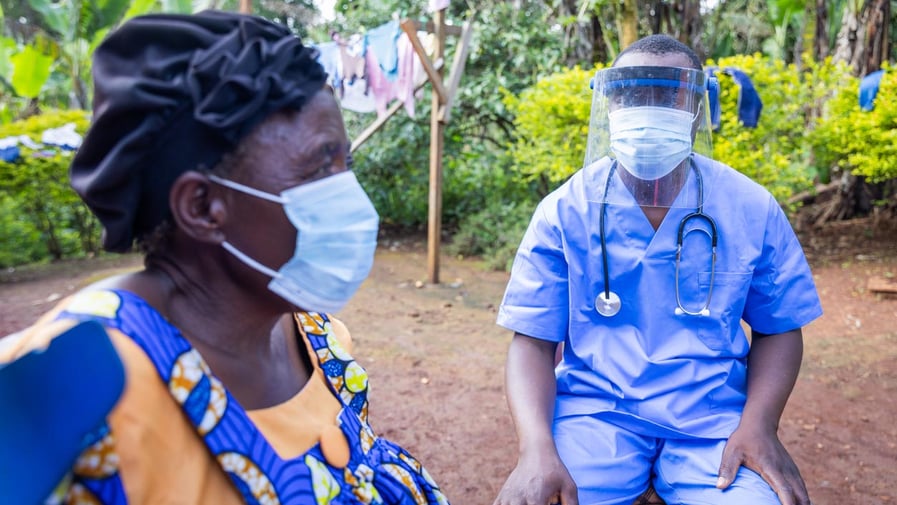
These pressures also create a dangerous operating environment for healthcare workers. As responders are asked to do more with fewer resources, frustration over the slow pace of progress risks fuelling hostility towards aid workers in communities where multilateral actors such as the UN have often been perceived as unable to address regional insecurity. Recent funding shortfalls also threaten to further weaken security measures and safety training, increasing the vulnerability of frontline staff in high-threat settings such as eastern DRC. Alongside the presence of armed groups, there have already been incidents in which health facilities were burned and staff threatened by grieving relatives barred from traditional burial rites because of strict protocols on handling Ebola victims’ bodies.
Contagion and coordination
While the WHO currently assesses the risk of international spread from the current Ebola outbreak as low, it considers the risk of transmission at the national and regional levels to be very high and high, respectively. Amid the current challenges hampering efforts to contain the outbreak, contact tracing is reportedly identifying only around half of the contacts of infected individuals, well below the more than 90 percent generally required to bring an outbreak under control. Taken together, these factors make it unlikely that the outbreak will be contained quickly and mean it still has considerable scope to spread. Neighbouring countries are already on high alert, with Uganda closing its land border with the DRC, while countries further afield, including the US and Canada, have imposed broader restrictions on travellers from the DRC, Uganda and South Sudan. The WHO, however, has warned that blanket travel restrictions alone are rarely sufficient to confine transmission and has instead emphasised the need for a coordinated response involving local, regional and international actors. The extent to which such a response can be assembled and maintained in practice will shape how effectively the outbreak is contained.