The capture and extradition of Venezuelan President Nicolás Maduro Moros by US forces in early 2026 was an extraordinary event that marked a pivotal moment for the country’s history. In this article, Marcelo Guerra González and Mileena Anzola, explore Venezuela’s complex and rapidly evolving political landscape following the capture of Maduro. Drawing on recent developments and ongoing transition efforts, Marcelo and Mileena provide insight into the challenges and opportunities shaping Venezuela’s future in a post-Maduro era.
US capture of Nicolás Maduro
On January 3, 2026, the US launched airstrikes across Venezuela and subsequently announced that it had captured Venezuelan President Nicolás Maduro Moros. While the US government announced Venezuela would be under temporary US control, the Venezuelan Supreme Court appointed Vice President Delcy Eloína Rodríguez Gómez as acting president immediately following Maduro’s detention. The following day, Rodríguez released a statement inviting the US to cooperate “towards shared development within the framework of international law.”
A mixed transition
Venezuela’s security response was aggressive in the days following Maduro’s removal. For example, Venezuela's then-Defense Minister Vladimir Padrino López activated the Venezuelan armed forces nationwide, while Venezuela's Permanent Representative to the United Nations, Ambassador Samuel Moncada, formally requested an emergency Security Council meeting. By mid-January, armed pro-Maduro security units increased their presence in Caracas, arresting citizens who publicly supported the capture of Maduro.
Venezuelan oil exports nearly doubled from 489,000 barrels per day in December 2025 to 800,000 by February 2026.''
However, Rodríguez simultaneously took conciliatory steps towards a rapprochement with the US government, including overseeing the release of over 300 political prisoners, including high-profile figures such as opposition leader and former Deputy of the National Assembly of Venezuela Biagio Pilieri, the 2024 presidential candidate Enrique Octavio Márquez Pérez, and Venezuelan lawyer and human rights activist Rocío San Miguel Sosa. In late January, Rodríguez also proposed an amnesty bill forgiving political violence since the presidency of former Venezuela President Hugo Rafael Chávez Frías and ordered the closure of El Helicoide detention center in Caracas, which human rights organizations have alleged was a torture site for political opponents. Additionally, on January 30, 2026, the Venezuelan National Assembly, which is primarily controlled by Maduro’s party, the Partido Socialista Unido de Venezuela, unanimously approved the amnesty bill in February 2026 and announced it would begin building a transition roadmap for future elections and political stability.
All eyes on oil
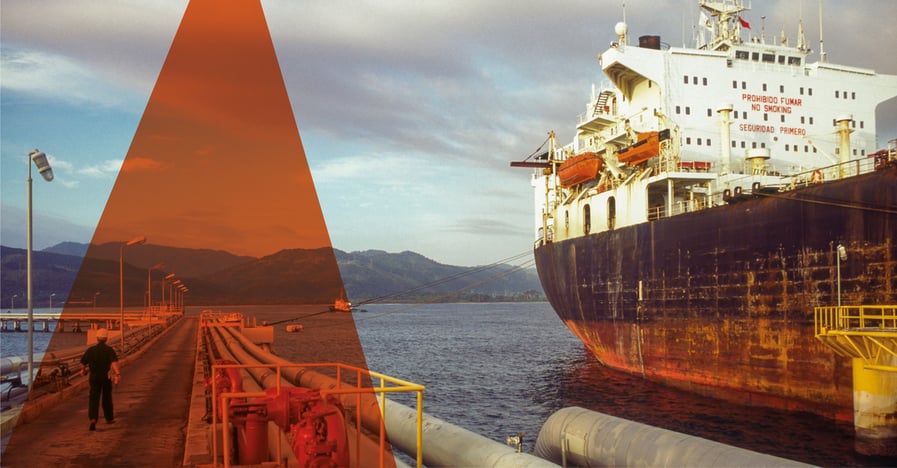
In parallel with Venezuela’s mixed response to Maduro’s detention, the US’ response centered around Venezuela’s oil industry. As part of the transition, the US government announced foreign oil companies would be allowed to enter Venezuela to refurbish the country’s oil infrastructure, and US President Trump held a meeting with US oil companies seeking USD 100 billion in investments. Additionally, the US government declared a national emergency in Venezuela to protect oil income from creditors and court seizures.
On January 23, 2026, the Venezuelan legislature issued preliminary approval for a bill allowing private companies to independently engage in oil exploration and extraction, which was previously prohibited under Maduro and Chávez. By February 2, 2026, roughly a month after Maduro’s capture, Venezuelan oil exports nearly doubled from 489,000 barrels per day in December 2025 to 800,000 by February 2026, and the newly appointed US Chargé d'Affaires to Venezuela, Laura Farnsworth Dogu, began reestablishing a US diplomatic mission. Despite its focus on oil, US officials have also made efforts to open Venezuela’s mining sector. Following a meeting between Rodríguez and US officials, Venezuela’s National Assembly approved a draft law allowing foreign entities to participate in the mining sector, and the US subsequently granted licenses allowing US companies to engage in operations with the Venezuelan mining sector.
In February 2026, the US partially lifted some of the sanctions on Venezuela in exchange for commitments on democratic efforts, such as free elections, as well as reforms of its security sector and steps to address the country’s economic crises. The US also granted licenses to traders seeking to do business with previously sanctioned Venezuelan entities. Throughout February, Venezuela’s internal dynamics remained volatile, with both pro- and anti-Maduro factions holding demonstrations focused on Maduro’s arrest, political reforms, and foreign interventions.
Remaining challenges facing investors
Moving forward, key members of Maduro’s regime are likely to remain in power in the near to mid-term. Rodríguez’s compliance with US policies under continued pressure from Washington illustrates a pragmatic approach to maintaining her own political power, which could further fractionalize internal political dynamics in the country. On March 18, 2026, Rodríguez replaced Padrino with General Gustavo González López as the country’s new defense minister. González previously served as the director of the Venezuelan intelligence agency for nine years, and was sanctioned by the US over claims of undermining democracy and participating in human rights violations. Meanwhile, the political future of prominent Chavista and Venezuela’s interior minister since 2024, Diosdado Cabello Rondón, who retains firm control of the state’s repressive security apparatus, – is less clear. Cabello’s long-running support of Maduro and Chávez may lead him to contribute to undermining US efforts to install a new regime post-Maduro.
As S-RM’s analysis highlighted in December 2025, Maduro’s removal has dramatically altered Venezuela’s investment climate, which has given rise to new opportunities as well as evolving risks. For international private companies to significantly increase their presence in Venezuela, Rodríguez must ensure a stable and secure environment for foreign direct investment by reducing the level of criminal activity and associated drug flow into the US, which will pose a challenge for the new regime given the heightened presence of colectivos – armed pro-Maduro, anti-US militias – patrolling the streets of Caracas since Maduro’s capture. Additionally, analysts have speculated that criminal gangs such as the Tren de Aragua – designated as a Foreign Terrorist Organization by the US – will capitalize on the political instability, leading to increased violence.
Furthermore, while the unwinding of prior trade and business restrictions is a positive initial step for foreign investors, the strict control the US maintains over the transition, including the requirements for specific US-granted licenses and use of US-controlled accounts for revenue flows, may hinder actors from entering the Venezuelan oil and gas sector. Lastly, as highlighted by US President Donald Trump, the country’s oil and gas and mining sectors’ infrastructure requires major refurbishment, but any efforts to revitalize them will likely be constrained by Venezuela’s massive financial liabilities and defaulted obligations.
For international private companies to significantly increase their presence in Venezuela, Rodríguez must ensure a stable and secure environment for foreign direct investment by reducing the level of criminal activity and associated drug flow into the US.''
Future of investment
Considering the persistent security, infrastructure, and fiscal challenges, ensuring political and economic stability, particularly within the oil and gas sector, are essential for Rodríguez to successfully oversee Venezuela’s return to a policy platform that welcomes and protects foreign direct investment. Additionally, perennial issues associated with Venezuela, such as bribery and corruption, will continue posing a significant risk exposure in Venezuela. The ongoing transition will require a considerable amount of political maneuvering on Rodríguez’s part, continuous US monitoring to ensure compliance with its stated policy goals, as well as a matter of time and patience. As such, post-Maduro Venezuela poses enduring investment risks and arbitration challenges with historical issues exacerbated by the current political fractionalization and uncertainty following Maduro’s capture.