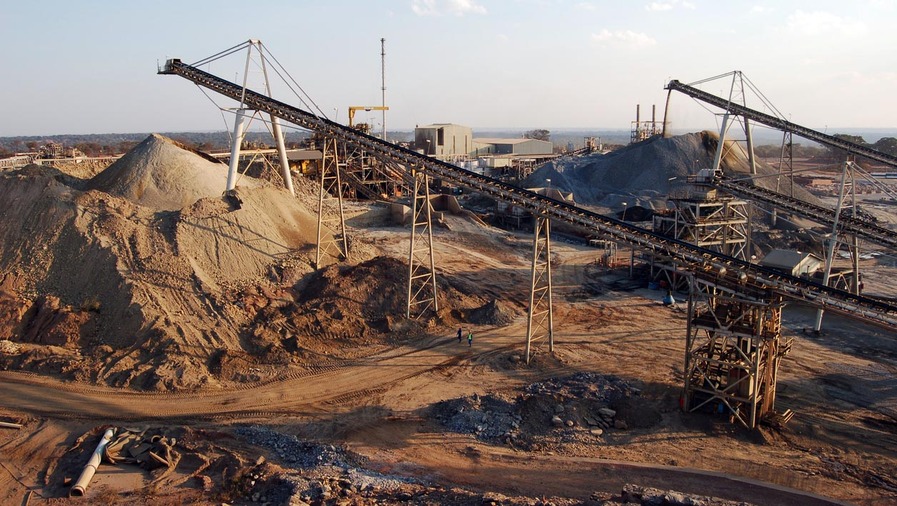
The nature of investor-state disputes in Africa is changing. In recent years governments across Africa have taken an increasingly interventionist approach, auditing historical agreements, reopening fiscal terms, asserting control over strategic assets and using domestic regulatory, judicial and criminal processes to strengthen their negotiating positions. For investors, the resulting disputes are being fought not only before tribunals, but across much wider commercial, political and reputational terrain.
Governments have become more assertive in their management of strategic industries – and particularly in the mining sector – in recent years. Contract and licence reviews, tax and customs investigations, local-content enforcement and requirements for increased state participation are becoming more common. For example, since 2014, more than 30 African countries have reformed their mining codes with the intention of increasing state involvement in the sector. In some more contentious scenarios, reforms of this kind have been accompanied by forceful interventions, including the detention of company personnel, the seizure of commodities and the appointment of state administrators.
This is not a single, continent-wide movement. The motivations, legal frameworks and institutional capacity of African governments vary considerably. Numerous African governments have legitimate concerns that historical agreements have provided insufficient public benefit, particularly where valuable resources have been exported without adequate tax revenue, local processing or community development.
Nevertheless, the increase in overt state intervention is changing the disputes landscape for investors on the continent. Increasingly, investors must be aware that a dispute over a local investment may expand into a simultaneous regulatory, judicial, political and public-relations confrontation in which the sovereign has considerable home-ground advantage.
Mining moves to the front line
The shift is most visible in mining, where high commodity prices and global demand for gold, copper, cobalt, lithium and uranium have increased both the value of African mineral assets and the political pressure on governments to retain more of that value. This is particularly true against the backdrop of the global energy transition, which relies on critical minerals to develop clean energy technologies.
Shifts in the treatment of local investors are, unsurprisingly, often driven by broader regional trends and changes in government or political system. For example, the neighbouring west African states Mali, Burkina Faso, and Niger, have all engaged in increased resource nationalism since undergoing coups in 2020, 2022, and 2023 respectively, resulting in increased challenges for investors.
case study
Loulo-Gounkoto
The dispute between Barrick Mining and Mali over the Loulo-Gounkoto gold complex offers an instructive example. The conflict followed the adoption of Mali’s revised 2023 mining code, which increased the potential participation of the state and local investors in mining projects. The disagreement escalated beyond negotiations over fiscal terms. It involved operational disruption, the detention of company employees, the seizure of gold and the placement of the complex under provisional administration. Barrick responded to these actions by initiating ICSID proceedings against Mali while negotiations between the parties continued. Ultimately, in November 2025, Barrick and Mali reached a settlement under which Barrick paid approximately USD 430 million and withdrew the arbitration in exchange for the restoration of its Malian operations. The settlement resulted in the release of four Barrick employees from a Malian prison.
The outcome illustrates an important feature of the emerging market. Formal arbitration remains central to the parties’ legal positions, but is also only one component of the dispute. The final settlement was determined by negotiations between the parties, and shaped by variables including events on the ground, the state’s control over the operating environment, the investor’s ability to withstand a prolonged shutdown, and the commercial importance of restoring production. In such circumstances, the tribunal process is a critical source of leverage, but not the sole pathway to resolution.
A parallel case in Niger
A similar dynamic is observable in Niger. In 2024, the year after its coup, Niger seized control of the SOMAÏR uranium mine from France’s Orano, as well as detaining the company’s local representative. Orano has since initiated multiple ICSID arbitrations against Niger. The tribunals have instructed Niger not to sell, transfer or facilitate the transfer of uranium produced by SOMAÏR and requested the release of the detained employee. Nevertheless, Niger exported material from the site in November 2025.
The dispute demonstrates the practical gap that can emerge between a favourable procedural order and control over an asset, and the critical role of intelligence-gathering in identifying that gap and supporting the pursuit of compensation"
Whatever the eventual legal outcome, the dispute demonstrates the practical gap that can emerge between a favourable procedural order and control over an asset, and the critical role of intelligence-gathering in identifying that gap and supporting the pursuit of compensation. A tribunal may restrain the transfer of a commodity, but the investor must still establish what has been produced, where it is stored, how it is moving and which parties are participating in its sale or transport. These are factual and investigative questions as much as legal ones.
Critical minerals raise the stakes
Competition for minerals required for the energy transition is adding another layer of complexity. Assets that once attracted specialist mining investors are now linked to the industrial strategies of major powers, battery manufacturers and electric-vehicle supply chains.
The dispute over the Manono lithium project in the Democratic Republic of the Congo demonstrates how questions of licensing, ownership and state participation can be subject to geopolitics. Australia’s AVZ Minerals and its subsidiaries have pursued proceedings against the state in recent years relating to the alleged failure to grant an exploitation permit for land for which it held exploration permits. The backdrop of the dispute is DRC’s transfer of the mining rights to a joint venture between the state-owned Cominière and China’s Zijn Mining.
For investors, disputes of this kind cannot be understood by examining the licence document alone. They require a clear picture of historic ownership transfers, the relationships between state-owned companies and government decision-makers, the identities and interests of rival commercial parties, and the wider geopolitical significance of the asset.
Identifying what lies behind government intervention
The same applies where a state’s action is formally grounded in tax, customs, environmental or local-content enforcement. The stated basis for an investigation may be only one part of the story. A company needs to understand whether the action is being driven by a genuine compliance concern, a change in policy, competition for the asset, political pressure to demonstrate greater national control, or a combination of these factors.
That distinction matters. It affects whether the company should prioritise legal challenge, technical remediation, government engagement, public communication or a negotiated commercial solution. It is therefore critical that investors are equipped with up to date and actionable intelligence regarding the dispute, so that they can plot the best course to a successful resolution.
Beyond mining
Although mining is currently the clearest expression of the trend, similar conditions are present across African energy markets. Large projects are capital intensive, politically prominent and dependent on licences, production-sharing agreements, state-owned counterparties and long-term fiscal stability. This makes them particularly exposed to changes of government and shifts in public expectations.
Following its 2024 election, for example, Senegal established a commission to review strategic agreements across the mining and oil and gas sectors, as well as announcing a wider sectoral audit. The process was presented as an attempt to ensure that contracts better served the national interest. The Natural Resource Governance Institute has noted that a carefully managed review could improve the state’s long-term benefits, while an opaque process could damage relations with partners and discourage future investment.
The Senegalese example is important because it demonstrates that more forceful sovereign oversight does not inevitably produce a dispute. Transparent reviews, technically credible audits and structured negotiations can allow governments and investors to rebalance their relationships without introducing significant uncertainty or destabilising live projects. The risk increases where review processes have unclear objectives, become politically charged or are accompanied by threats to licences and operations.
Returning to a commercial footing
There is also precedent for disputes eventually returning to a negotiated commercial footing. In Zambia, Vedanta Resources regained control of Konkola Copper Mines in 2024 after a prolonged conflict that began when the mine was placed into provisional liquidation in 2019. The court-approved arrangement included a payment of approximately USD 246 million to creditors and enabled the reinstatement of the company’s board and management control.
The lesson is not that sovereign action inevitably leads to expropriation, or that arbitration inevitably produces recovery. Rather, outcomes turn on the parties developing a nuanced understanding of the commercial and political pressures surrounding the dispute. Assets can be returned, agreements revised and operations restarted where both sides identify a workable route forward. Such a route can generally only be found when supported by robust, actionable intelligence, allowing an investor to understand the roots of the problem they are dealing with, and the identities of the key stakeholders who can help them resolve it.
The investigation outside the courtroom
Just as the types of disputes which arise between investors and African states are changing form, the evidence needed to navigate them is also evolving. A company contesting the withdrawal of a licence may need to reconstruct the decision-making process that led to the withdrawal, including the roles of government officials, regulators, local partners and rival bidders. A claimant seeking damages may need to establish what the asset was worth at a particular point, what information was available to the parties, and whether subsequent transactions contradict the valuation advanced by an opponent.
Our work supporting parties to litigation and arbitration in Africa illustrates the necessity of a multifaceted investigative approach. Our investigations typically involve sourcing public records from all relevant jurisdictions, often via contacts on the ground where such records can only be retrieved in person. We couple this public record approach with enquiries among well-placed sources. In a recent case regarding a shareholder dispute over an investment in the oil and gas sector in a southern African jurisdiction, government and industry sources provided key insight into the timing of an outside investment, changes in corporate ownership, and what market participants knew about impending exploration activity in the region. The work demonstrated how corporate documents, securities filings, licence records and carefully sourced human intelligence can collectively address questions that no single repository can answer.
At the enforcement stage, the focus shifts again. Where an arbitral award has been handed down, simply identifying an asset belonging to the state in question is not enough. Creditors need to understand its ownership, commercial use, jurisdiction, encumbrances and vulnerability to sovereign-immunity arguments. Where the target is a state-owned enterprise, this may require analysis of the degree of state control, payment flows, receivables, trading relationships and evidence relevant to an “alter ego” argument. Effective sovereign enforcement combines asset tracing with stakeholder mapping, evidence gathering and the identification of political and commercial leverage in order to secure a settlement or develop a successful enforcement strategy.
Navigating a more assertive state
A resurgence in friction between investors and states does not justify withdrawing from African mining and energy markets. The continent’s mineral resources, growing energy requirements and importance to global supply chains will continue to create substantial opportunities, particularly in light of the energy transition. But the way in which investors assess and manage disputes must evolve.
Before committing capital, companies should understand not only the applicable law and contractual protections, but also the political durability of the agreement. This includes examining whether its terms are likely to withstand a change of administration, whether local participation is substantive or merely formal, and whether the distribution of benefits can be defended publicly.
Once a disagreement emerges, investors need to undertake an early and realistic assessment of the state’s motives and objectives. Some governments will be seeking increased revenue. Others may want a change in ownership, a new operating partner, greater domestic processing or a politically visible demonstration of sovereignty. The legal case is critical, but should be developed alongside – and informed by – a detailed map of decision-makers, pressure points and potential channels for resolution.
Finally, enforcement planning should begin well before an award is rendered. A claimant should understand where state and state-owned enterprise assets are located, which state-owned enterprises are demonstrably alter-egos of the state, which assets might be commercially used and attachable, how they move between jurisdictions, and what consequences attachment would have for the sovereign and its counterparties.
The investors best placed to navigate this environment will be those that prepare for disputes while projects are still healthy, and that respond to sovereign action with an integrated understanding of law, intelligence, politics and commercial reality. For companies, legal preparedness remains essential, but it is no longer sufficient on its own. Successful dispute resolution increasingly depends on establishing the facts behind state action, identifying the people and interests shaping it, understanding where assets and commercial relationships sit, and recognising when litigation is creating leverage for a negotiated outcome rather than an end in itself.
For organisations facing complex investor-state disputes, access to timely, reliable intelligence can provide critical insight into stakeholder interests, political dynamics and potential pathways to resolution. Contact the S-RM team to discuss any of the issues raised in this article.