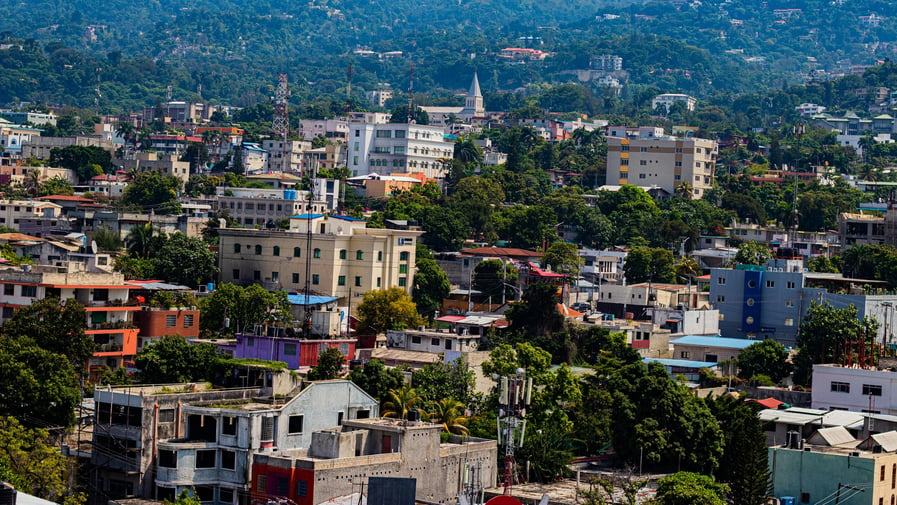
With kidnapping incidents in Haiti surging, Neil Mugabe examines the current dynamics driving targeted attacks on foreign personnel and highlights emerging hotspots amid intensifying gang violence.
Kidnapping-related incidents have intensified through 2026, highlighting the continued deterioration of Haiti’s security environment. According to a United Nations Integrated Office in Haiti (BINUH) report, 81 kidnapping incidents were recorded across Haiti between April and June, marking a 42 percent increase compared to incidents reported between January and March. Several factors appear to be driving the kidnapping surge, including weak state security capacity, diminished state authority (particularly in Port-au-Prince), and growing gang fragmentation and rivalry which is contributing to intensifying violence. While Haitian nationals remain the primary victims, 2026 has seen an increase in the targeting of foreign nationals, and perceived high-net worth individuals - raising exposure for business travellers, aid workers and diplomatic personnel.
Mapping the Risk
Political instability and economic challenges have enabled armed gangs to entrench their operations across Haiti. Gangs now have territorial control across most parts of the capital, Port-au-Prince, and are expanding into surrounding areas, including Kenscoff, Mirebalais, and the Plaine de Cul-de-Sac corridor, as they compete for control of strategic territory. This expansion has intensified countrywide security challenges and contributed to a surge in violent incidents, including kidnappings. The kidnapping risk remains highest along key transport corridors, such as the Delmas corridor, and routes linking the Toussaint Louverture International Airport with the city centre and onward routes to business and residential districts.
Foreign nationals in the crosshairs
Two recent incidents in close proximity to the Delmas corridor involving foreign nationals have brought renewed attention to Haiti’s kidnapping threat. In July 2026, a foreign businessman and his father escaped an attempted kidnapping near Hôpital La Paix in Delmas after their armoured vehicle prevented heavily armed assailants from intercepting them. Six days later, unidentified heavily armed gang members intercepted a vehicle carrying two South Korean employees of a Korean company operating in Port-au-Prince as they travelled to work in the same area. The assailants kidnapped both employees while they were being escorted by local police, shooting a police officer from their security detail in the process. The two victims were released several days apart unharmed after the South Korean government dispatched a rapid-response team to Port-au-Prince to help Haitian authorities to secure their release. While authorities have not confirmed whether a ransom was paid, kidnap for ransom is growing as a key source of income for criminal gangs, incentivising the targeting of foreign nationals, and perceived high net-worth individuals, including dual nationals and high-ranking public officials. Although no group has claimed responsibility for either incident, most kidnappings have been attributed to the Grand-Ravine and Village de Dieu gangs, both of which are part of the Viv Ansanm coalition.
Tactics and Ransom demands
Gangs commonly use roadblocks, fake checkpoints and vehicle interceptions to stop targets along urban and semi-urban routes before kidnapping them. Victims have been ambushed and abducted both individually and in groups and may be held for several weeks or months. Demands vary by gang and are largely shaped by perceptions of the victim’s wealth. Reported ransom amounts have ranged from tens of thousands of dollars to millions, for individuals or groups.
The Delmas corridor has been classified as a high-risk transit corridor and runs near areas contested by armed gangs, where the absence of a consistent police presence enables targeting even on routes that have previously appeared passable. Although the Gang Suppression Force (GSF) – a government initiative which aims to dismantle armed gangs through coordinated police and military operations - has conducted recent operations in parts of Delmas, these efforts have not yet translated into a stable security environment. Notably, the incidents occurred despite a police escort, underscoring gangs’ continued ability to mount kidnapping attempts even where protective measures are in place. As a result, in parts of Port-au-Prince where gang presence remains entrenched, even strengthened security arrangements are unlikely to meaningfully reduce exposure for targets in the near term.
Why the state can’t keep up
Haiti’s ability to enforce protective measures remains severely degraded. Police deployments are limited or intermittent across several districts in Port-au-Prince, while curfews and emergency measures are applied unevenly and cannot be consistently enforced. Armed groups continue to expand their reach, and recent kidnapping incidents indicate that they remain able to move, intercept vehicles and kidnap targets despite security operations. These shortcomings mean the government’s security response has yet to produce meaningful improvements on the ground. In the absence of reliable state-led protection, embassies, non-governmental and international organisations, are increasingly relying on private security arrangements to manage the movement of foreign personnel, underscoring a shift to organisational-level risk management.
The expanding control of gangs, and violence that comes with it, are further creating operational challenges for governance. The prospects for general elections to be held on 13 December 2026 are being marred by gang violence and kidnapping risks restricting civilian movement, impeding candidate registration and political campaigning, and complicating the transport of ballots and personnel.. As such, the Provisional Electoral Council (CEP) has stated that general elections will only proceed should authorities establish an acceptable security environment and secure the necessary financial resources. While the elections are unlikely to solve Haiti’s security challenges in the near term, continued delays prevent the restoration of a constitutional government able to coordinate and strengthen cooperation with international organisations to meaningfully address the issues.
Looking Ahead
As armed groups retain both the capacity to operate and control several districts of the capital, the kidnapping risk to foreign nationals is likely to remain elevated over the coming months, especially leading up to the general elections. While ongoing security operations may contribute to deterring gang-related violence, any improvements are expected to be geographically uneven, leaving gang influence and territorial control prevalent across many affected areas.