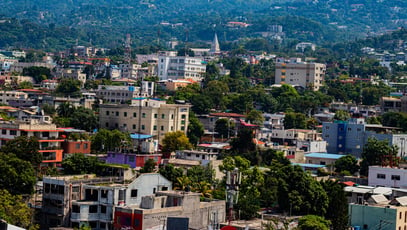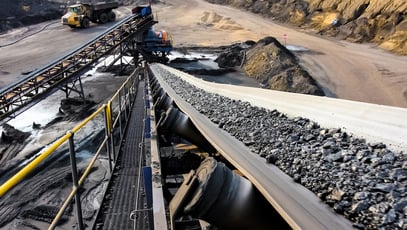
As Colombia grapples with the aftermath of a devastating 7.4 magnitude just days after President Abelardo de la Espriella was sworn into office, Tor Lansing examines how the disaster's fiscal and logistical toll threatens the new administration’s austerity agenda and hardline security strategy.
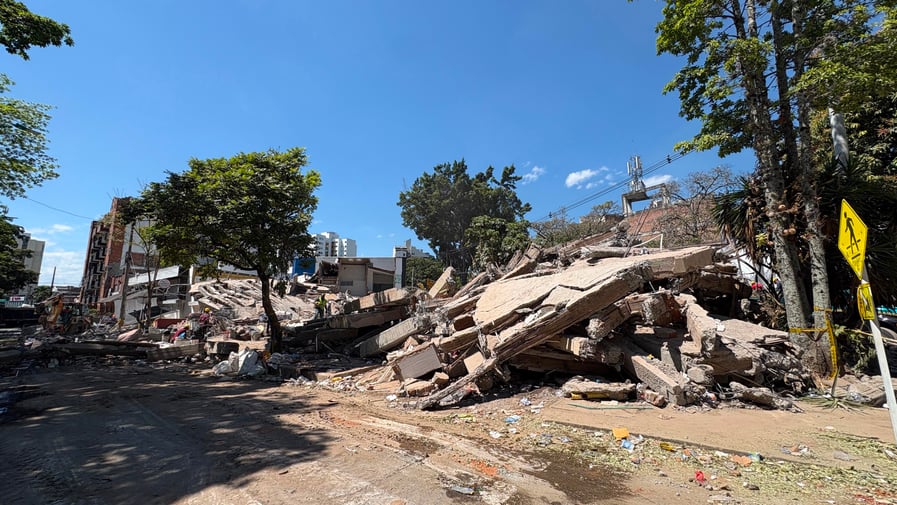
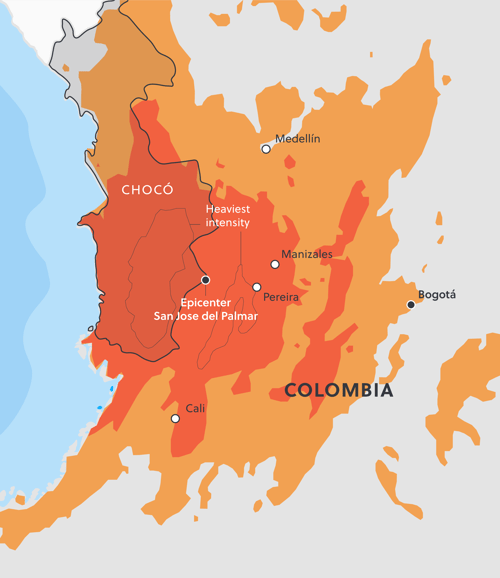
On August 20, 2026, a devastating 7.4 magnitude earthquake struck 15 of Colombia’s 32 departments. The epicenter impacted key populated centers, mining hubs, and peripheral regions – including the heavily affected department of Chocó. Initial assessments confirm at least 250 fatalities, thousands injured, and extensive destruction to private property and vital transport, energy, and communications infrastructure. The disaster occurred a mere three days after President Abelardo de la Espriella (‘De la Espriella’) took office on 7 August. De la Espriella assumed the presidency following a campaign focused on aggressive public spending cuts, structural state downsizing, and a return to a conservative, hardline security doctrine. The timing of the crisis forces an untested administration to manage a major national humanitarian response while simultaneously attempting to establish its legislative and executive authority.
Earthquake Impact
Jumping into the deep end
The disaster presents an immediate operational and political challenge for De la Espriella’s nascent administration. The government’s platform explicitly targeted state agencies for budget reductions, including the Unidad Nacional para la Gestión del Riesgo de Desastres (‘UNGRD’), Colombia’s disaster prevention and response agency. However, the emergency response has underscored that the UNGRD remains the sole state mechanism capable of coordinating complex search and rescue operations, damage assessments, and distribution of relief supplies. Attempting to cut frontline disaster management in the immediate aftermath would carry prohibitive political and humanitarian costs.
Financially, the crisis undermines the De la Espriella administration’s fiscal framework. Early official estimates place total economic losses at COP 30 trillion (USD 9.6 billion), comprising COP 24.5 trillion (USD 7.9 billion) in physical structural damage and COP 5.5 trillion (USD 1.7 billion) in critical infrastructure damage. Rebuilding damaged roads, bridges, and municipal services will require significant unbudgeted capital expenditure, inevitably pressuring the administration’s commitments to fiscal discipline and risking the diversion of funds from core policy goals, including planned social programs and military procurement. While the government has leveraged its political alignment with the US to secure immediate humanitarian aid and international emergency credit lines, external financing will only cover short-term disaster relief. Long term reconstruction costs will remain anchored to the national balance sheet.
Political and security implications
De la Espriella has inherited a highly polarized political environment and a fragmented Congress. Opposition factions aligned with former President Gustavo Petro have already begun scrutinizing the government’s response, framing early administrative delays or proposed budget cuts to social resilience budgets as executive failure. While natural disasters occasionally offer leaders a rally ‘round the flag’ opportunity to display decisive executive leadership, any perceived slowness, corruption, or operational failure in relief distribution will give opposition forces leverage to obstruct De la Espriella’s broader legislative agenda. The convergence of natural disaster, political transition, and preexisting conflict dynamics exacerbates structural weaknesses across Colombia’s political and security landscape.
Under De la Espriella, Colombia’s security apparatus has undertaken a sharp strategic pivot, moving away from Pedro-era negotiation policies toward direct military containment, a shift that mirrors broader regional trends in Latin America. The administration officially terminated several active peace processes inherited from the previous government and ordered intensified military offensives against the far-left guerrilla organizations Ejército de Liberación Nacional (‘ELN’) and dissident factions of Fuerzas Armadas Revolucionarias de Colombia (‘FARC’).
In this context, the disaster complicates the security environment in three key ways:
- Resource diversion: Military and police units essential for counterinsurgency operations are being rerouted to assist in disaster logistics, airlifts, and civil protection, leading tactical vacuums in peripheral regions.
- Insurgent exploitation: Illegal armed groups and drug trafficking cartels are likely to exploit overstretched state presence to consolidate control over illicit economies and territorial corridors.
- Access restrictions: Ongoing security operations in affected areas present severe hazards to humanitarian workers, local populations, and aid distribution, potentially citizens to be trapped between state military actions and insurgent presence.
Regional spotlight
Chocó
The Pacific department of Chocó serves as a prime example of how the disaster complicates the security environment for an already vulnerable population. Prior to the August 10 earthquake, Chocó suffered from acute poverty, geographic isolation, weak state presence, and entrenched control by the ELN and drug cartel Clan del Golfo.
The earthquake severely disrupted Chocó’s precarious transport network and mining infrastructure. With primary roads blocked by landslides and riverine transport impacted, vulnerable rural communities face immediate supply shortages. The state’s reliance on military forces to deliver aid to Chocó increases the potential for armed clashes near relief hubs, which could disrupt humanitarian access and deepen local community grievances against the central government.
Outlook
The August 10 earthquake has severely compressed President Abelardo de la Espriella’s political honeymoon, forcing his administration into a delicate balancing act between fiscal austerity, emergency response, and an aggressive security campaign. Over the coming months, key signposts to watch include whether the government formally backtracks on plans to defund the UNGRD or attempts to pass an emergency fiscal package through a divided Congress, as well as the speed and scope of US military logistical assistance, and whether domestic political opposition frames his reliance as a concession of national sovereignty. There is also the potential for local strikes or blockades in hard hit peripheral regions if reconstruction funds are slow to materialise or are prioritised toward urban centers over vulnerable rural departments. Ultimately, if the administration fails to efficiently navigate aid delivery while maintaining regional security, the resulting sociopolitical friction will exacerbate instability across Colombia in the months ahead.