From energy prices to supply chains to global productivity, the impact of the Middle East conflict has been nothing short of extensive. While the trajectory of the conflict remains uncertain, Shannon Lorimer explores the volatility, instability and disruption likely to persist even in the case of a de-escalation.
The impact of the Middle East conflict has been widespread. Higher energy prices have raised transport costs and forced factory closures, world food supply is coming under threat with fertiliser and grain shipments not gaining passage through the Strait of Hormuz, and sectors including automobile, aviation, construction and technology are beginning to feel the pinch of longer shipping routes and material shortages. These impacts combined are building inflationary pressures and weighing on a global system still recovering from shocks stemming from the COVID-19 pandemic and the Russia-Ukraine war. Even if the conflict is marked by continued de-escalation in the coming weeks, the interruption to key maritime routes, damage to strategic infrastructure, and the disruption of critical supply chains, will have long-term consequences for global activity.
These impacts combined are building inflationary pressures and weighing on a global system still recovering from shocks stemming from the COVID-19 pandemic and the Russia-Ukraine war."
The energy conundrum
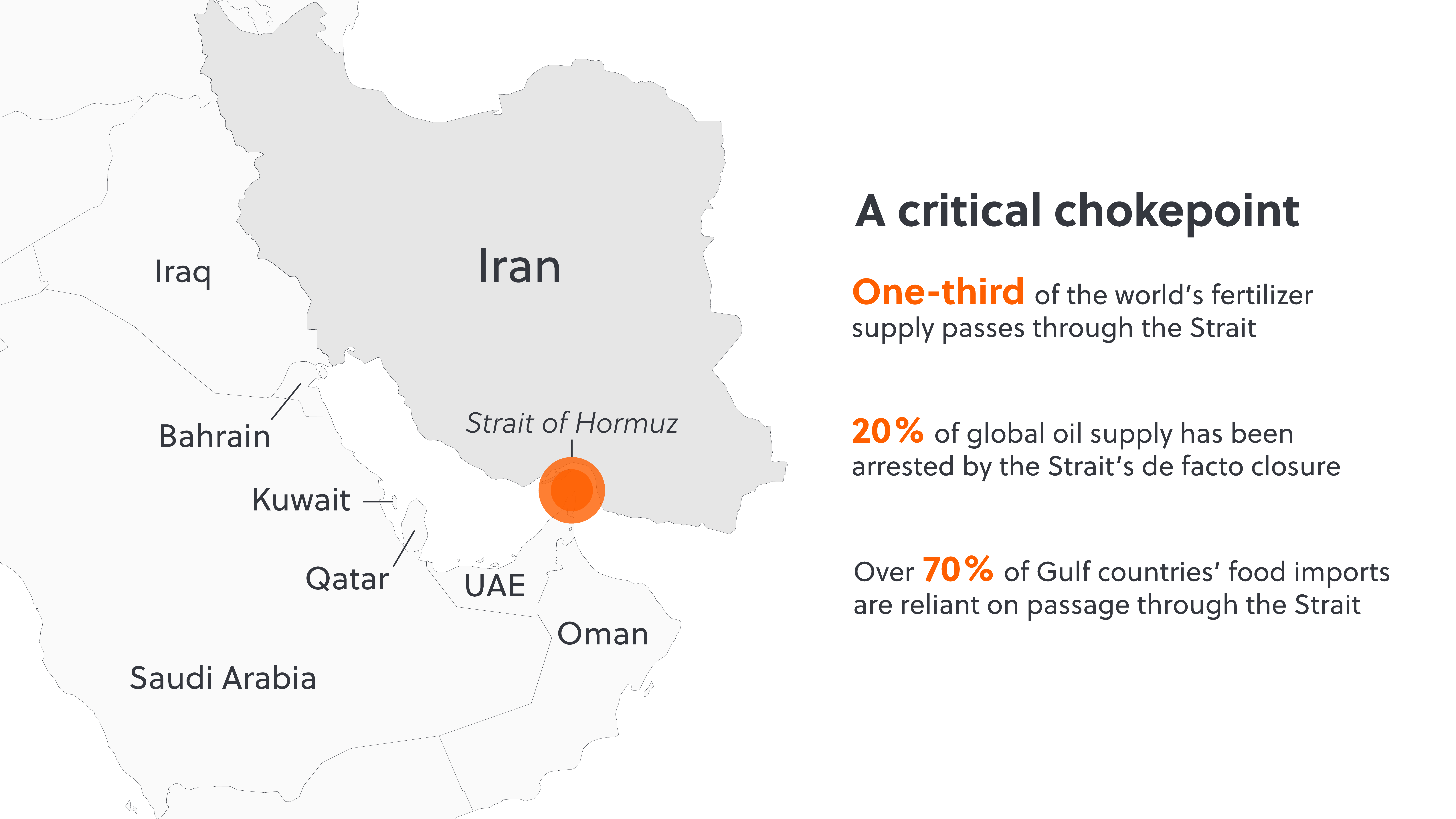
Energy supply and prices remain under pressure and are unlikely to return to pre-conflict levels. On top of the de facto closure of the Strait of Hormuz – arresting the passage of 20 percent of global oil supply – the International Energy Agency (IEA) has reported that more than 40 energy facilities across nine countries have been severely damaged in the conflict. These damages have impacted production and require lengthy and costly repairs, in the billions. For example, the reconstruction required at Ras Laffan in Qatar, one of the world’s largest liquefied natural gas sites, could take up to five years. While efforts are underway by IEA members to release further energy stockpiles to ease short-term supply bottlenecks, these emergency reserves are insufficient to address longer-term energy supply challenges.
Broken chains
In parallel, Iranian attacks against regional ports and commercial vessels in the Strait of Hormuz have placed pressure on global logistics and supply chains. Higher energy prices and the re-routing of vessels around the Cape of Good Hope (adding 10-14 days to transit time) have impacted transport costs and delivery reliability for sectors across the spectrum, including automobile, fast-fashion and construction. Businesses with supply chains reliant on fertilisers and key minerals, including aluminium, helium and sulphur, have also come under the spotlight. With around 20 percent of the world’s fertiliser originating from the Gulf, price increases of urea and ammonia are generating significant financial challenges for agricultural producers in Asia and Africa, and raising questions around food shortages should the conflict extend. The semiconductor industry, car manufacturers, and the construction sector – all reliant aluminium, helium and other critical components – are also facing shortages and challenges sourcing alternative suppliers, difficulties that are set to remain.
Case Study
Decline in productivity
With crude oil and refined products from the Middle East unable to reach buyers, many countries are seeking and implementing emergency measures to mitigate the impact of higher oil prices and reduced supply. Pakistan and the Philippines have introduced a four-day work week for government employees, while Thailand has made work from home mandatory for government officials. In South Korea, the government has reduced public transport availability, permitting only 50 percent of vehicles to remain in operation on a rotational basis. Sri Lanka and Slovenia, too, have rationed petrol and diesel consumption. With more governments planning to introduce similar measures, productivity declines are expected as countries manufacture less and deliver fewer services.
The dark space
Pro‑Iranian actors have also stepped-up cyber operations, with a focus on critical national infrastructure in Iran’s neighbourhood – particularly in Saudi Arabia, the UAE, Israel and other regional rivals – and on selected US assets. For most companies, the main commercial effects are likely to be indirect: website slow‑downs or outages when large‑scale ‘traffic flooding’ attacks hit service providers or major brands, reputational or legal issues if sensitive data is stolen and published, and operational disruption should cyber incidents affect ports, energy facilities, water systems, chemical plants or other industrial sites. Companies also face exposure via compromised email accounts, shared platforms or look‑alike websites (for example, fake donation pages designed to capture passwords and install malicious software). At the same time, coordinated ‘war‑related’ online campaigns that mix phishing emails, false information, and fake emergency‑support channels with physical strikes will make crisis communication more challenging.
Many governments will remain limited in their ability to extend support due to existing debt burdens, and the risk of adding to inflation"
Hard landing ahead?
From supply chain disruptions, to energy price volatility and productivity declines, the knock-on effects for global economic activity will be wide-reaching. Businesses and consumers will face higher prices across the board, with energy, transport, input material and final product costs all increasing. Market volatility and inflation fears will impact and delay investment decisions. Inflationary pressures will additionally impact global central banks’ ability to cut interest rates and, in some cases, have already raised prospects of multiple rate rises over the course of 2026. As challenges mount, governments will come under increasing pressure to offer support for businesses and consumers, with demonstrations already occurring in the Philippines and India demanding fuel subsidies. Across the world, however, many governments will remain limited in their ability to extend support due to existing debt burdens, and the risk of adding to inflation.